Export Supplier Documents: What Buyers Should Request
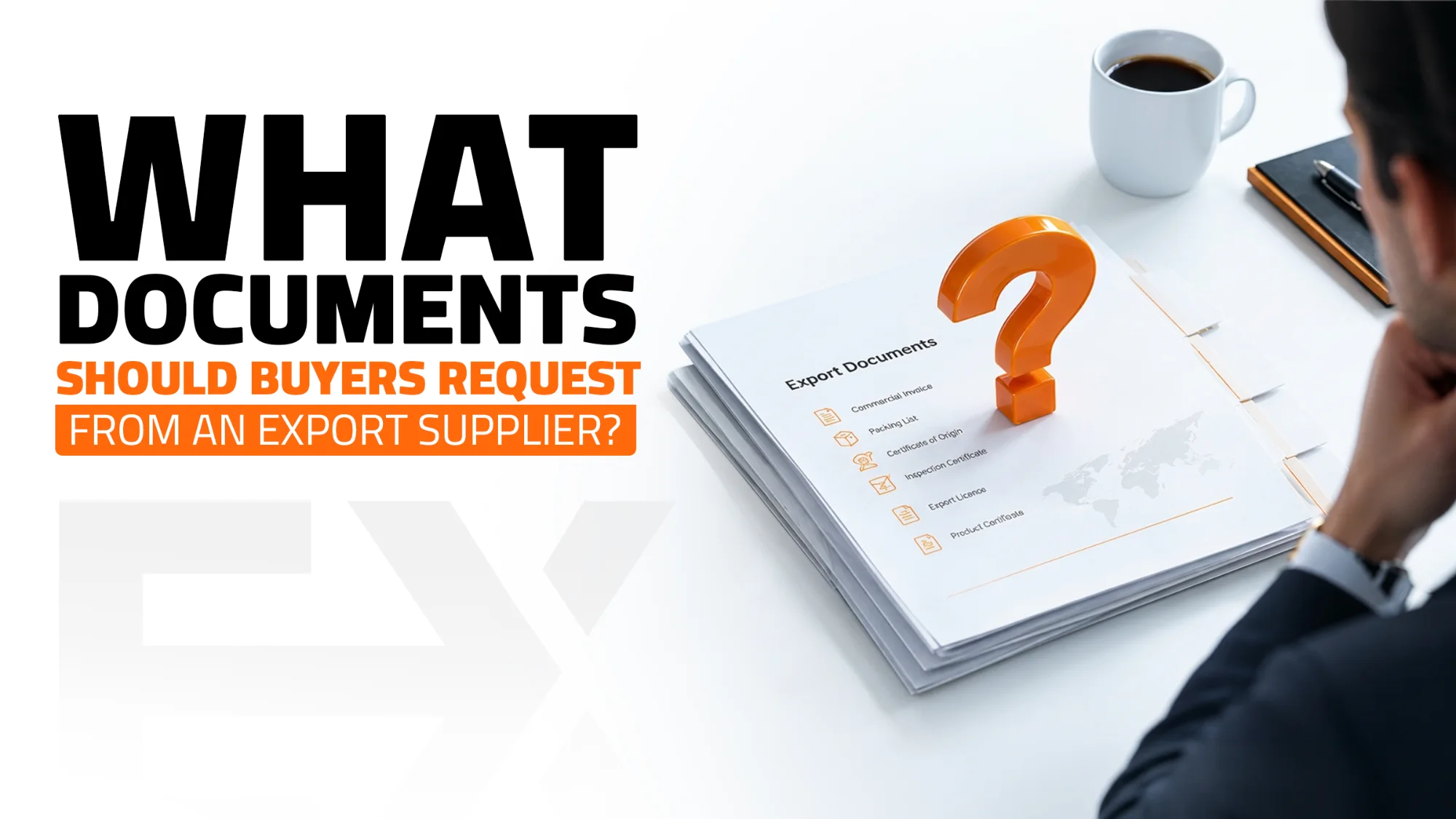
Importing products from an overseas supplier requires more than agreeing on a price and delivery date. Buyers need documents that confirm the supplier’s identity, define the product specifications, establish the commercial terms, and support customs clearance. The exact export supplier documents required will depend on the product, destination country, payment method, and applicable regulations. However, reviewing the right documents before payment and shipment can help buyers identify inconsistencies, reduce avoidable delays, and establish clearer responsibilities with the supplier. This guide explains the main documents international buyers should request, when they should request them, and what they should check before proceeding with an order. Why Export Supplier Documents Matter Documents do not eliminate every risk in international trade, but they provide evidence that can be reviewed and compared. A complete document set can help a buyer: Confirm the supplier’s legal identity. Check whether the supplier is authorized to sell or export the products. Verify product specifications, packaging, and quantities. Compare the quotation with the final agreement. Prepare for payment, inspection, shipping, and customs clearance. Identify missing information before it delays the transaction. Establish which party is responsible for each stage of the order. Buyers should not request documents simply to collect files. Every document should serve a clear commercial, regulatory, quality, or logistical purpose. 1. Company Registration Documents Before discussing a substantial order or making an advance payment, request documents that identify the legal business behind the offer. Depending on the supplier’s country, these may include: Certificate of incorporation or commercial registration. Valid business or trading license. Registered business address. Tax identification or VAT registration. Export license, when required. Name of the authorized company representative. Company bank account details. Check that the legal name appears consistently across the registration certificate, quotation, invoice, contract, and bank beneficiary information. A difference does not automatically indicate fraud because some businesses use trading names or related companies. However, the supplier should provide a reasonable explanation and supporting documentation before the buyer transfers funds. A personal bank account that does not match the supplier’s legal identity should receive additional scrutiny. For a broader review process, buyers can also read How to Verify a Supplier Before Importing Products . 2. Product Specification Sheet A product name alone is rarely enough to define what the buyer will receive. Request a written specification sheet containing the characteristics that matter for the order. Depending on the product, this may include: Materials or ingredients. Dimensions, weight, size, or grade. Model or product code. Color and finish. Technical performance requirements. Shelf life and storage conditions. Country of origin. Packaging format. Units per carton. Carton dimensions and gross and net weight. Labeling requirements. Acceptable quality tolerances. The final specification should be referenced in the purchase order, sales agreement, or approved sample record. This reduces the chance of the buyer and supplier relying on different descriptions of the same product. 3. Product Certifications and Regulatory Documents The certificates required for one market may not be accepted or required in another. Requirements can also vary by product category. Possible documents include: Product conformity certificates. Health or sanitary certificates. Phytosanitary certificates. Veterinary certificates. Halal certificates. Organic certificates. Food safety certifications. Material safety data sheets for chemicals or regulated materials. Technical test reports. Certificates of analysis. Manufacturer declarations. Import or export licenses. Labeling and packaging compliance documents. The buyer should verify: Which organization issued the document. Whether the issuing body is recognized by the destination authority. The certificate number and scope. The products, facility, and company covered. The issue and expiry dates. Whether independent verification is available. A certificate carrying a recognizable name is not automatically valid for every product, factory, or destination. The European Commission’s Access2Markets product requirements tool helps importers identify product requirements, import procedures, document examples, and competent authorities for the European Union. 4. Certificate of Analysis or Laboratory Report For food, agricultural products, cosmetics, chemicals, and other specification-sensitive goods, buyers may need a Certificate of Analysis, commonly called a COA, or an independent laboratory report. The report may confirm: Ingredients or chemical composition. Moisture, purity, or concentration. Microbiological results. Allergen information. Pesticide or residue limits. Heavy-metal results. Nutritional values. Batch number. Production and testing dates. Compliance with an agreed standard. Check whether the report relates to the actual production batch or is only a general sample report. For higher-risk or higher-value orders, the buyer may require testing by an agreed independent laboratory. 5. Pro Forma Invoice A pro forma invoice is normally issued before shipment and acts as a detailed commercial quotation. It is not the final demand for payment, but it helps both parties confirm the proposed terms. A strong pro forma invoice should include: Supplier and buyer legal names and addresses. Product description and specifications. Quantity and unit of measurement. Unit price and total value. Currency. Harmonized System code, when available and confirmed. Country of origin. Packaging information. Incoterm and named location. Estimated production and delivery schedule. Payment terms. Freight and insurance charges, when applicable. Validity period of the offer. Supplier bank details. According to the U.S. International Trade Administration, a pro forma invoice may be used when applying for an import license, arranging pre-shipment inspection, opening a letter of credit, or arranging a currency transfer. Buyers can review its official pro forma invoice guidance . Never approve a pro forma invoice containing unclear product descriptions, missing quantities, unexplained charges, or incomplete payment terms. 6. Purchase Order or Sales Agreement Once the commercial terms are accepted, the parties should record them in a purchase order, sales contract, or digital agreement. The agreement should clearly identify: Buyer and seller. Product and approved specifications. Quantity and price. Payment method and payment milestones. Production deadline. Inspection requirements. Shipping terms. Incoterm and named destination. Required documents. Acceptance criteria. Procedure for defective or non-conforming goods. Delay, cancellation, and dispute provisions. Governing law or agreed dispute process, where applicable. A quotation, invoice, product specification, and contract should not contradict one another. Resolve inconsistencies before payment. 7. Approved Sample or Sample Confirmation If the order depends on color, taste, dimensions, material, workmanship, packaging, or branding, approve a sample before mass production. Keep a written record containing: Sample code or reference number. Images of the approved sample. Date of approval. Approved specifications. Approved packaging and label files. Permitted tolerances. Sign-off from both parties. The agreement should state whether the approved sample is the production standard and how later changes must be authorized. A sample demonstrates what the supplier can produce, but it does not prove that every production unit will be identical. Buyers may still require quality controls and inspection. 8. Pre-Shipment Inspection Report A pre-shipment inspection can verify the goods before they leave the supplier’s facility. The inspection scope may cover: Quantity. Visible workmanship. Measurements. Product specifications. Packaging and labeling. Barcode and shipping marks. Functional testing. Carton count. Container loading. Photos of the inspected goods. The inspection company should be independent or mutually accepted by both parties. Buyers should define the inspection standard and acceptance criteria before production, rather than after a disagreement occurs. An inspection report reduces uncertainty, but it does not replace product certification, laboratory testing, cargo insurance, or a properly written agreement. 9. Commercial Invoice The commercial invoice is issued for the completed sale and is a primary customs document. It should match the final transaction and normally include: Exporter and importer details. Invoice number and date. Detailed description of the goods. Quantity and unit price. Total value and currency. Country of origin. HS code, when properly classified. Incoterm. Freight, insurance, and other charges where applicable. Payment terms. The U.S. International Trade Administration describes the commercial invoice as a required document for export and import clearance and explains that customs authorities use it to assess duties and taxes. See its official commercial invoice guidance . The commercial invoice must be consistent with the packing list, transport document, certificate of origin, and customs declaration. 10. Packing List A packing list provides the physical details of the shipment. It may include: Number of cartons, pallets, drums, or containers. Contents of each package. Package numbers. Gross and net weight. Package dimensions. Volume. Shipping marks. Product codes. Container or seal number, when applicable. Customs authorities, freight forwarders, warehouses, carriers, and buyers may all use this document when checking the shipment. The packing list should not include quantities or weights that conflict with the commercial invoice or transport document. 11. Certificate of Origin A Certificate of Origin confirms the declared country of origin of the goods. It may be required for customs clearance, trade-policy measures, bank documentation, or preferential tariff treatment. The International Chamber of Commerce explains that certificates of origin help customs, banks, and businesses determine tariffs, trade measures, and legal compliance. Buyers can review the ICC’s Certificate of Origin guidance . Check: Issuing authority. Exporter details. Product description. Country of origin. Invoice reference. Authentication method. Whether the destination requires a preferential or non-preferential proof of origin. A Certificate of Origin should not be treated as proof of product quality. Its purpose is to support the origin declaration. 12. Bill of Lading, Air Waybill, or Other Transport Document The required transport document depends on how the goods are shipped. Common examples include: Bill of Lading for sea freight. Air Waybill for air freight. Road consignment note. Rail transport document. Multimodal transport document. Review: Shipper and consignee. Notify party. Ports or airports of loading and discharge. Description and quantity of goods. Container and seal numbers. Freight terms. Shipment date. Original, copy, or electronic release requirements. The European Commission lists commercial invoices, proof of origin, transport documents, packing lists, and relevant certificates among the documents commonly used for customs clearance. Its customs documentation guidance provides additional examples. 13. Cargo Insurance Certificate When cargo insurance is required under the agreed Incoterm or contract, request evidence showing: Insured party. Covered shipment. Insured value. Covered risks. Coverage period and route. Exclusions. Claims procedure. Insurer and policy number. Do not assume that the carrier’s limited liability provides the same protection as cargo insurance. The buyer and supplier should confirm which party arranges insurance, who pays for it, and who can submit a claim. 14. Payment-Specific Documents Different payment methods require different supporting documents. Letter of Credit The buyer, supplier, and banks must agree on the exact documentary requirements. Even small discrepancies between submitted documents and the letter of credit may delay or prevent payment. Escrow Confirm the identity of the escrow provider, transaction terms, inspection period, release conditions, fees, and dispute process. Payments should be made only through the provider’s verified transaction flow. Bank Transfer or T/T Confirm that the beneficiary details match the agreed supplier or authorized recipient. Independently verify any last-minute request to change the bank account. Card or Stripe-Supported Payment Check the merchant identity, invoice, payment description, refund terms, and whether the payment option is available to the buyer and supplier in their respective countries. No payment method replaces supplier verification, product due diligence, or a clear commercial agreement. When Should Buyers Request These Documents? Before Shortlisting the Supplier Request: Company registration. Business or export license where required. Product specification sheet. Relevant certifications. Initial quotation. Before Paying or Confirming the Order Request: Final pro forma invoice. Purchase order or agreement. Approved specifications. Sample confirmation. Payment instructions. Production schedule. Inspection plan. Before Shipment Request: Inspection report. Commercial invoice. Packing list. Certificate of Origin. Product certificates and batch reports. Insurance certificate where applicable. Draft transport document. After Shipment Request: Final Bill of Lading, Air Waybill, or transport document. Final signed and stamped documents where required. Shipment tracking information. Customs-supporting documents. Claims and warranty contact information. Warning Signs Buyers Should Investigate Pause and investigate if: The company name changes between documents without explanation. Payment is requested to an unrelated personal account. Certificate details cannot be verified. The supplier refuses to provide basic registration information. Product specifications remain vague. The invoice omits quantity, origin, currency, or delivery terms. Bank details change immediately before payment. The supplier pressures the buyer to skip inspection. Documents show inconsistent addresses, dates, signatures, or product descriptions. The supplier promises that one certificate covers every product and market without evidence. One inconsistency may have a legitimate explanation, but it should be resolved before the buyer proceeds. Export Supplier Document Checklist Before confirming an international order, verify that you have the documents relevant to the transaction: Company registration. Business or export license, where required. Product specification sheet. Relevant product certificates. Certificate of Analysis or test report, where applicable. Pro forma invoice. Purchase order or sales agreement. Approved sample record. Pre-shipment inspection report, where required. Commercial invoice. Packing list. Certificate of Origin. Bill of Lading, Air Waybill, or transport document. Cargo insurance certificate, where required. Payment-specific documents. Destination-country import documents. Not every transaction requires every item on this list. Buyers should confirm the exact requirements with their customs broker, bank, logistics provider, inspection company, and the competent authorities in the destination country. How Exponax Supports International Sourcing Exponax helps international buyers discover suppliers and products across the Middle East, Africa, and Turkey. Suppliers whose products appear publicly complete Exponax’s baseline verification process. Eligible suppliers can also obtain Golden Verified status through an independent third-party on-site inspection. Buyers can use Exponax to: Explore supplier and product information. Communicate sourcing requirements. Submit a free RFQ. Receive and compare relevant quotations. Use structured digital agreements. Coordinate eligible transactions using available payment options, including third-party escrow where applicable. Verification badges and platform tools support the sourcing process, but buyers should still review the documents required for their specific product, destination, and transaction. Explore the Exponax Marketplace or submit a free RFQ to receive quotations from relevant suppliers. Frequently Asked Questions What is the most important document to request from an export supplier? There is no single document that covers every risk. Start by verifying the supplier’s legal registration, then request a detailed product specification and pro forma invoice. Additional certificates and shipping documents depend on the product and destination. Should buyers request certificates before placing an order? Yes, when certification affects legality, safety, quality, labeling, or market access. Verify that the certificate covers the correct company, facility, product, standard, and validity period. Is a pro forma invoice proof that the goods were shipped? No. A pro forma invoice is a pre-shipment quotation and commercial proposal. Shipment is normally supported by a Bill of Lading, Air Waybill, or another applicable transport document. Does a Certificate of Origin prove product quality? No. It supports the declared origin of the goods. Product quality should be assessed using specifications, samples, inspections, certifications, and test reports. Are all documents required for every shipment? No. Requirements vary by product, origin, destination, transport method, payment method, and local regulation. Confirm the final document list before payment and shipment.
- Published
- 2026-09-20
- Updated
- 2026-09-20