Pre-Shipment Inspection Checklist for International Buyers
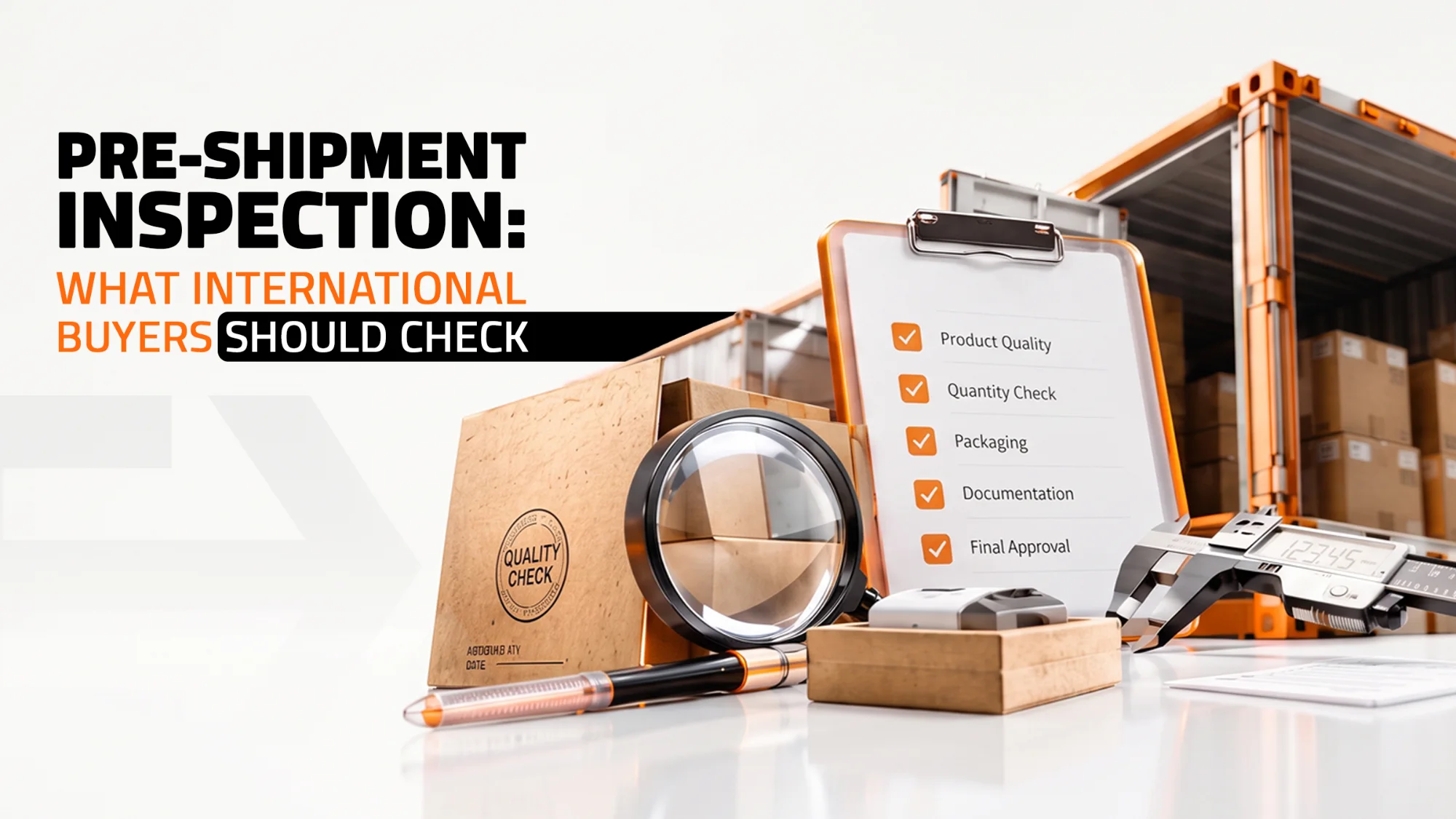
A pre-shipment inspection helps international buyers verify goods before they leave the supplier's facility. It can identify visible defects, incorrect quantities, packaging problems, labeling errors, and differences between the approved specification and the finished order. Inspection does not eliminate every import risk, and it does not replace product testing, certification, cargo insurance, customs compliance, or a clear sales agreement. However, when the scope and acceptance criteria are defined before production, it gives the buyer evidence to review before shipment and final payment. This pre-shipment inspection checklist explains what buyers should prepare, what an inspector should check, and what to do when the result is not acceptable. What Is a Pre-Shipment Inspection? A pre-shipment inspection, often abbreviated as PSI, is an examination of goods before they are shipped. It is commonly conducted when production is substantially complete and enough goods are packed to allow the inspector to select samples and review the shipment. The inspection may be performed by the buyer, an employee, an independent inspection company, or another qualified party accepted by the buyer and supplier. The scope should be based on the product, order value, destination requirements, buyer specifications, and identified risks. A generic visual check is not sufficient for every category. Why Buyers Use Pre-Shipment Inspections A properly planned inspection can help a buyer: Confirm that production quantity matches the order. Compare finished goods with approved specifications and samples. Identify visible workmanship defects. Check packaging, labels, barcodes, and shipping marks. Witness basic function or performance checks. Review carton count, weight, dimensions, and packing configuration. Document the condition of goods before shipment. Request corrective action before the goods leave the factory. The inspection should be treated as one part of a broader quality and transaction-control process. 1. Define the Inspection Scope Before Production Do not wait until the inspector arrives to decide what should be checked. The buyer and supplier should agree on the scope before production begins. Provide the inspector with: Purchase order or sales agreement. Final product specification sheet. Approved sample reference. Approved artwork and label files. Packaging requirements. Required certificates or test reports. Inspection checklist and test methods. Defect classifications and acceptance limits. Photos or drawings showing critical details. Instructions should identify which requirements are critical, which can be measured during inspection, and which require laboratory testing or specialist verification. 2. Confirm Production Readiness Before scheduling the visit, confirm the production status. If too few units are finished, the sample may not represent the complete order. Confirm: Percentage of production completed. Percentage packed for export. Location of all finished goods. Availability of cartons, labels, and accessories. Availability of equipment required for testing. Planned shipment and container-loading dates. The appropriate inspection stage depends on the product. Some orders also require an initial production check, during-production inspection, or container-loading supervision. 3. Verify Product Identity and Specifications The inspector should confirm that the goods presented are the goods covered by the order. Check: Product name, model, SKU, and item code. Material, ingredients, composition, or grade. Color, finish, size, weight, and dimensions. Technical features and accessories. Country-of-origin marking where required. Batch, lot, production, and expiry information where applicable. Private-label branding and approved artwork. Measurements should use calibrated or appropriate equipment. Any permitted tolerance should be written in advance rather than negotiated after a failed result. 4. Count the Quantity Quantity errors can affect payment, customs documents, inventory, and customer deliveries. Verify: Total units produced. Total cartons or packages. Units per carton. Assortment by size, color, model, or flavor. Spare parts, accessories, and promotional items. Under-shipment or over-shipment against the agreed tolerance. The counted quantity should later be compared with the commercial invoice, packing list, and transport document. 5. Inspect Workmanship and Visible Defects Workmanship checks depend on the product, but may include: Cracks, dents, scratches, stains, or deformation. Loose, missing, or incorrectly assembled components. Incorrect stitching, sealing, cutting, or finishing. Leaks, contamination, moisture, or foreign material. Uneven color, printing, coating, or texture. Damaged or incomplete accessories. Incorrect product variants mixed in one carton. Defects should be classified using the agreed categories, such as critical, major, and minor. The report should include counts, photographs, sample size, and the applied acceptance criteria. 6. Perform Function and Safety Checks Where appropriate, the inspector may conduct basic tests defined by the buyer. Examples include: Power-on and functional operation. Assembly and fit checks. Drop, leak, load, or basic durability tests. Measurements of weight, dimensions, temperature, or moisture. Barcode scanning. Package-seal checks. Comparison with an approved reference sample. A factory inspection is not automatically a laboratory test. Chemical, microbiological, electrical-safety, food-safety, or regulatory testing may require an accredited laboratory and a separate sampling plan. 7. Review Packaging Packaging protects the product and affects freight, handling, storage, and customer presentation. Check: Inner packaging and protective materials. Export-carton strength and condition. Carton dimensions and gross and net weight. Units per carton and carton assortment. Pallet type, stacking pattern, and wrapping. Protection from moisture, heat, impact, or contamination. Required shipping marks and handling symbols. Whether packaging matches the approved artwork. If packaging efficiency affects freight cost, compare the actual carton dimensions and volume with the supplier quotation. 8. Verify Labels, Barcodes, and Marks Labeling errors can delay customs clearance or prevent lawful sale in the destination market. Verify: Product name and description. Ingredients or materials where required. Net content and unit of measurement. Country of origin. Manufacturer or responsible-party information. Batch, production, and expiry dates. Required warnings and instructions. Language requirements. Barcode number and scan result. Carton and pallet shipping marks. The buyer should confirm destination-country requirements with the competent authorities or a qualified compliance adviser. The inspector should compare the physical labels with the approved files, not decide legal compliance without an appropriate mandate. 9. Review the Required Documents Ask the supplier to prepare draft or final documents according to the transaction stage. These may include: Commercial invoice. Packing list. Certificate of Origin. Certificate of Analysis. Product test reports. Health, sanitary, phytosanitary, or veterinary certificates. Inspection certificate. Insurance documents where applicable. Draft transport document. Names, addresses, quantities, weights, product descriptions, invoice references, and dates should be consistent. Read Export Supplier Documents: What Buyers Should Request for a broader document checklist. 10. Check Carton and Shipment Details Record: Number of cartons, pallets, drums, bags, or crates. Package numbers and shipping marks. Gross and net weight. Package dimensions and shipment volume. Storage condition at the facility. Visible condition of completed packages. Container and seal numbers if loading is included. If the inspection occurs before container loading, a separate loading-supervision service may be required to confirm the goods actually loaded and the condition of the container. 11. Document the Inspection With Evidence A useful inspection report should include: Supplier and facility information. Order and product references. Inspection date and location. Production status. Sample size and selection method. Tests and checks performed. Measured results. Defect descriptions and quantities. Photographs of goods, labels, cartons, measurements, and defects. Overall result and unresolved points. The buyer should retain the report with the contract, approved sample, payment record, and shipping documents. 12. Decide What Happens After the Result The inspection report provides evidence, but the buyer must decide the commercial response according to the agreement. If the result passes Review any minor observations. Confirm final documents. Complete the agreed payment or release stage. Proceed with shipment or loading. If the result is pending or requires correction List every required corrective action. Set a deadline and responsible party. Request evidence of correction. Arrange reinspection where necessary. If the result fails Do not approve shipment or payment automatically. Compare the findings with the written acceptance criteria. Request repair, rework, replacement, sorting, or another agreed remedy. Document any amendment to the agreement. Use the agreed dispute process if the parties cannot resolve the issue. How Exponax Supports a Structured Deal Process Exponax helps buyers organize international sourcing through RFQs, supplier quotations, communication, digital agreements, and transaction coordination. A buyer can use the agreement and deal workflow to define product requirements, documents, inspection expectations, payment milestones, and acceptance conditions before shipment. Where eligible payment options are used, inspection evidence can support an agreed transaction milestone. However, Exponax does not perform every inspection itself, certify every product, or replace an independent inspection company, laboratory, insurer, customs broker, or competent authority. Buyers remain responsible for selecting the appropriate inspection scope and qualified service providers for their product and destination. Pre-Shipment Inspection Checklist Confirm the final purchase order and specification. Provide the approved sample and artwork. Define the sample size and acceptance criteria. Confirm production and packing readiness. Verify product identity and dimensions. Count units, cartons, and assortments. Inspect visible workmanship and defects. Perform agreed function and safety checks. Review packaging and shipping marks. Verify labels, barcodes, and dates. Review certificates and shipment documents. Record weights, carton dimensions, and volume. Photograph products, packaging, tests, and defects. Document corrective actions and deadlines. Approve shipment only according to the agreement. Frequently Asked Questions When should a pre-shipment inspection take place? It normally takes place when production is substantially complete and enough goods are packed for representative sampling. The best timing depends on the product, inspection scope, and shipment schedule. Does a passed inspection guarantee that every unit is defect-free? No. Many inspections use sampling rather than checking every unit. The result reflects the inspected sample, applied criteria, and checks performed. Is pre-shipment inspection the same as laboratory testing? No. Visual and functional inspection at a factory does not replace laboratory analysis, regulatory testing, or certification when these are required. Who should pay for the inspection? The buyer and supplier should agree in writing. The agreement should also state who pays for reinspection when the first result fails. Can the buyer release final payment after inspection? Only according to the agreed payment terms. If inspection is a payment milestone, the agreement should define the required report, acceptance criteria, correction process, and release conditions. Final Recommendation Prepare the inspection before production, not after problems appear. Define the specification, sampling approach, checks, defect categories, acceptance limits, required evidence, and remedies in writing. Use the report to make an informed decision before shipment and payment, while recognizing that inspection is one part of supplier verification, quality control, documentation, logistics, and transaction management. Explore suppliers on Exponax or submit a free RFQ to start a structured sourcing request.
- Published
- 2026-09-29
- Updated
- 2026-09-29