Zero Tariffs on Egyptian Exports to China: What It Means for Global Buyers
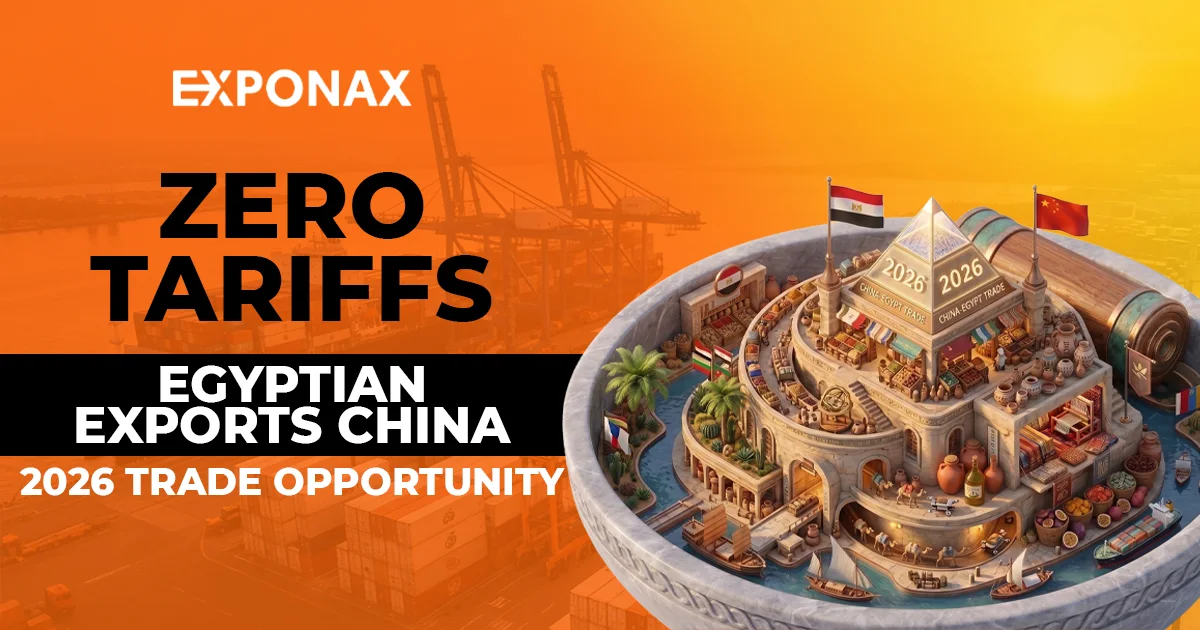
Zero Tariffs on Egyptian Exports to China: What It Means for Global Buyers Published April 2026 | Market Analysis | Egypt, China, Global Trade China has officially opened its market to Egyptian exports with zero tariffs, effective from May 1, 2026. As part of a sweeping trade agreement covering 53 African countries, Beijing has removed import duties on goods from Egypt and across the continent in what economists are calling the most significant Africa-China trade development in a generation. For global buyers sourcing from Egyptian manufacturers, the implications are immediate and significant. What happened and when The agreement was announced at the China-Africa Economic and Trade Expo in Changsha in June 2025 , building on commitments made at the Beijing China-Africa summit in September 2024. China pledged to eliminate import tariffs on goods from all 53 African countries it holds diplomatic relations with, covering nearly the entire continent. Implementation began May 1, 2026 . Egypt is one of the most strategically significant beneficiaries, given its position as a BRICS+ member since 2024, its Suez Canal control over roughly 12% of global trade, and its existing industrial base in the Suez Canal Economic Zone, which has attracted over $11.6 billion in investment between 2022 and 2025, with Chinese investors accounting for approximately half. The trade imbalance context In 2024, China exported $16.9 billion worth of goods to Egypt while importing well below $1 billion in return, creating a trade deficit exceeding $15 billion in China's favour. The zero-tariff policy is Beijing's most concrete move yet to address this imbalance, and for Egyptian manufacturers it represents the most direct access to China's $17 trillion consumer market they have ever had. What zero tariffs actually mean for Egyptian manufacturers Before this agreement, Egyptian goods entering China faced standard most-favoured-nation (MFN) tariff rates, which varied significantly by product category: food and agricultural goods faced tariffs ranging from 10% to 25%, textiles from 10% to 17%, and processed goods from 6% to 30% depending on the HS classification. Removing these tariffs entirely makes Egyptian-origin goods immediately more price-competitive in the Chinese market, without any change in production cost. For Egyptian manufacturers who have historically focused on Gulf and European buyers, this creates a third major market corridor with a combined consumer population exceeding 1.4 billion people. The African Export-Import Bank forecasts a 30 to 40% increase in African exports to China by 2026 if the policy is backed by implementation. For Egypt specifically, analysts at the Egyptian Center for Economic Studies suggest this could mean tripling Egyptian exports to China over the medium term. Which Egyptian product categories benefit most Not all Egyptian exports benefit equally. The most significant commercial opportunities for Egyptian manufacturers and their international buyers are concentrated in the following categories: What this means for international buyers sourcing from Egypt For buyers currently sourcing Egyptian goods for Gulf, European, or US markets, the China zero-tariff policy has three direct implications worth acting on now. Egyptian manufacturers will have more export options, making verification more important As Chinese demand for Egyptian goods increases, Egyptian manufacturers will have more buyer options, and the most commercially capable, verified manufacturers will be the first to be absorbed into Chinese distribution networks. Buyers who have not yet established verified supplier relationships with Egyptian manufacturers risk losing access to the best-quality producers as they prioritise new market opportunities. The time to lock in verified supplier relationships is before Chinese buyers do it first. Pricing dynamics may shift as demand increases Increased Chinese demand for Egyptian food, textiles, and cosmetics will put upward pressure on factory pricing and production allocation. Buyers who move now while Egyptian manufacturers are still actively seeking Gulf and European partners will secure better pricing and MOQ terms than those who approach the same suppliers in six to twelve months when their order books have filled. Egypt as a supply origin gains additional credibility China's decision to open its $17 trillion market specifically to Egyptian-origin goods is an implicit quality and supply signal. For Gulf and European buyers who may have had reservations about Egyptian manufacturer capability, the fact that Chinese state buyers are now targeting the same supply base removes a significant credibility barrier. Egypt-origin sourcing is about to become significantly more mainstream. What this means for Exponax buyers Exponax's verified Egyptian manufacturers across food, cosmetics, and agricultural products are exactly the supplier base that this zero-tariff agreement is designed to benefit. Buyers who source from verified Egyptian manufacturers through Exponax are accessing the same factories that are now attracting Chinese state buyer interest, at direct factory pricing, with all documentation already verified. Challenges Egyptian exporters still need to overcome The zero-tariff opportunity is real, but analysts note that tariff removal alone does not guarantee a surge in Egyptian exports. Several structural challenges remain that both Egyptian manufacturers and their international buyers should be aware of. Chinese market compliance requirements Entering the Chinese market requires compliance with China's General Administration of Customs (GACC) registration for food products, Chinese-language labelling, and product-specific inspection and quarantine procedures. Egyptian manufacturers targeting Chinese buyers will need to meet these requirements in addition to maintaining their existing halal, HACCP, and EU-standard certifications for other markets. For buyers, this means Egyptian manufacturers who already hold strong documentation and certification positions are significantly better placed to serve multiple market corridors simultaneously. Logistics and cold chain infrastructure Sea freight from Egyptian ports to Chinese ports typically takes 20 to 30 days, with routes primarily through the Suez Canal and across the Indian Ocean. Cold chain logistics for frozen seafood and fresh produce require investment in refrigerated container capacity and temperature-controlled handling at both origin and destination ports. The Suez Canal Economic Zone's existing logistics infrastructure, combined with COSCO Shipping Ports' 20% stake in the Suez Canal Container Terminal, gives Egypt a meaningful logistics advantage over other African origin countries in reaching Chinese ports. Sanitary and phytosanitary standards China applies strict sanitary and phytosanitary (SPS) controls on food imports, and Egyptian food manufacturers need GACC facility registration to export food products to China. This registration process is separate from, and additional to, standard halal and HACCP certification. Egyptian manufacturers who are already export-active to Gulf and European markets are more likely to have the quality management systems in place to meet Chinese SPS requirements, making them the priority targets for buyers building multi-market supply chains. The opportunity for buyers acting now The announcement of zero tariffs on Egyptian exports to China is not just a trade policy development. It is a signal that Egyptian manufacturers are entering a period of significantly elevated global demand across multiple market corridors simultaneously, including Gulf, European, US, and now Chinese buyers, all competing for supply from the same verified manufacturer base. For international buyers who source or are considering sourcing from Egypt, there is a narrow window to establish supplier relationships before Chinese demand absorbs the most capable manufacturers into long-term supply contracts. The buyers who move in 2026 will have their pick of Egypt's best verified producers. Those who move in 2027 will be negotiating against Chinese state buyers with significantly larger order volumes. Browse verified Egyptian food manufacturers, cosmetics producers, and agricultural exporters at exponax.com/suppliers/egypt , or post a free sourcing request at exponax.com/category/Agriculture-food-beverages to connect with verified Egyptian manufacturers today. Frequently asked questions When did the zero-tariff policy on Egyptian exports to China take effect? The policy took effect on May 1, 2026, following an announcement at the China-Africa Economic and Trade Expo in Changsha in June 2025 and the original commitment made at the Beijing China-Africa summit in September 2024. Which Egyptian products benefit most from zero tariffs in China? The highest-opportunity categories are fresh and frozen produce (citrus, frozen vegetables, strawberries), frozen seafood (Nile perch, tilapia, shrimp), dates and packaged foods, cotton textiles and garments, natural cosmetics and personal care products, and canned and preserved foods. Products in these categories that previously faced Chinese import tariffs of 10% to 25% are now entering the Chinese market duty-free. Does this affect buyers who source Egyptian goods for other markets? Yes, indirectly but significantly. As Chinese demand for Egyptian goods increases, Egyptian manufacturers will have more options for where to allocate production. Buyers sourcing Egyptian goods for Gulf, European, or US markets should move to establish or deepen supplier relationships now, before Chinese buyers absorb the most capable manufacturers into long-term supply contracts with larger volume commitments. How does this relate to Egypt's BRICS+ membership? Egypt joined BRICS+ in January 2024, deepening its strategic and economic ties with China. The zero-tariff agreement is separate from but complementary to BRICS+ membership, which facilitates local currency settlement, investment cooperation, and preferential financing between member states. Together, these developments position Egypt as one of China's most strategically important African trade partners. Where can I find verified Egyptian manufacturers to source from? Exponax lists verified Egyptian manufacturers across food, agriculture, cosmetics, and consumer goods, all with documentation confirmed through the Exponax verification journey. Browse the full Egyptian supplier directory at exponax.com/suppliers/egypt or post a free sourcing request to receive responses from verified Egyptian manufacturers within 48 hours. Conclusion The zero-tariff agreement between China and Egypt is a structural shift in global trade, not a short-term promotion. Egypt's manufacturers are now simultaneously accessible to Gulf, European, US, and Chinese buyers, and the competitive dynamics of Egyptian supply are about to change materially. For buyers who have been considering Egyptian sourcing, the question is no longer whether Egypt is a viable supplier origin. The question is whether you act before your competitors do.
- Published
- 2026-04-25
- Updated
- 2026-04-25